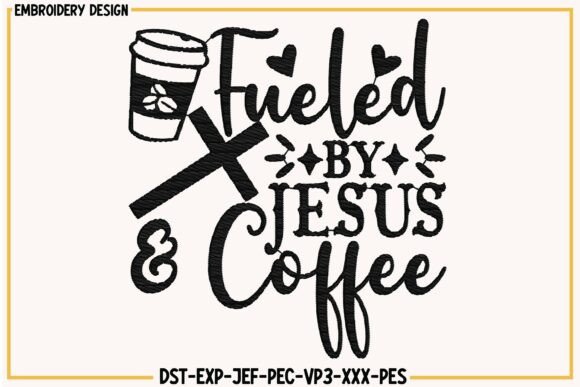
Fueled by Jesus Coffee Embroidery Design Evaluation
The intersection of faith-based messaging and daily rituals has created a distinct niche in the custom apparel and home decor markets. Among the most popular motifs is the Fueled by Jesus Coffee Embroidery design. This digital asset represents more than just a graphic; it is a tool for creators to apply specific religious and lifestyle statements onto various textiles. For hobbyists, small business owners, and professional embroiderers, understanding the technical specifications, aesthetic applications, and practical limitations of this design is essential before integrating it into a production workflow.
Understanding the Digital Asset
The Fueled by Jesus Coffee Embroidery design is a digitized pattern intended for use with computerized embroidery machines. Unlike physical patches or pre-printed transfers, this product exists as a set of coordinate data that instructs the machine on where to place stitches. The core concept combines two culturally significant elements: the ubiquity of coffee consumption and the declaration of Christian faith. The resulting visual typically features stylized text and often incorporates iconography such as coffee cups, steam, or crosses.
When evaluating this specific design, it is important to recognize that it is a digital download. Upon purchase, the user receives a compressed ZIP folder containing multiple file formats. These formats include DST, EXP, JEF, PES, PEC, VP3, and XXX. Each of these extensions corresponds to different manufacturers of embroidery machines, such as Tajima, Bernina, Janome, Brother, and others. The inclusion of these varied formats ensures broad compatibility, allowing the design to be loaded onto a wide range of equipment without the need for third-party conversion software, which can sometimes introduce errors in stitch density or placement.
Reasons for Interest and Application
Interest in the Fueled by Jesus Coffee Embroidery design stems from several factors. Primarily, it serves a demographic looking to express their identity through tangible items. For individuals who wish to wear their faith openly while celebrating a common daily habit, this motif offers a relatable and conversational entry point. It transforms standard garments like t-shirts, hoodies, and caps into personalized statements.
Beyond personal use, there is a commercial angle. Small businesses specializing in church merchandise, boutique clothing lines, or gift shops often seek designs that resonate with specific communities. A high-quality embroidery file allows these entrepreneurs to offer unique, handcrafted goods that differ from mass-produced screen-printed items. The texture and dimension provided by embroidery add a perceived value that flat printing cannot replicate. Furthermore, the versatility of the design allows it to be applied to diverse substrates, ranging from baby clothes and tote bags to cushions and upholstery, expanding its potential market reach.
Benefits and Technical Considerations
The primary benefit of utilizing a professionally digitized file like this one is efficiency. The design is described as having clean, precise lines and high-quality stitches, which suggests that the digitizer has optimized the stitch count and pathing to prevent puckering or thread breakage. For beginners, this reduces the learning curve associated with troubleshooting poor stitch quality. For professionals, it saves time that would otherwise be spent manually digitizing the artwork.
Scalability is another critical factor. The design offers scalable size options, meaning it can be resized within reasonable limits to fit different hoop sizes and garment placements. However, users must exercise caution here. While the file is scalable, reducing an intricate design too much can cause stitches to overlap or details to become indistinguishable. Conversely, enlarging it beyond the recommended parameters may require additional stabilizers to maintain structural integrity on the fabric.
The "instant digital download" nature of the product provides immediate access, eliminating shipping delays. This is particularly advantageous for those working on tight deadlines or needing to test a design before committing to a larger production run. The ability to load the file directly into major embroidery machines streamlines the workflow from concept to finished product.
Tradeoffs and Limitations
Despite the advantages, there are tradeoffs to consider. The reliance on digital files means the end-user requires access to an embroidery machine and the necessary hardware to transfer the files (such as USB drives or direct connectivity). Individuals without this equipment cannot utilize the design independently and would need to outsource the actual stitching, adding cost and logistical complexity.
Additionally, while the file formats cover most major brands, some specialized or older machines might not support every format listed. Users should verify their machine's compatibility list before purchasing. Another consideration is the aesthetic limitation of embroidery compared to other methods. Embroidery adds thickness and weight to the fabric. On very lightweight materials, such as thin cotton tees, heavy stitching can cause distortion if not properly stabilized. In contrast, screen printing or heat transfer vinyl might offer a flatter finish suitable for delicate fabrics.
There is also the matter of color customization. Most embroidery designs come with a fixed thread palette defined in the file. Changing colors requires manual adjustment within the machine's software or the editing software used to prepare the job. If a specific brand of thread is required to match a uniform or a specific color scheme, the user must ensure the design's color stops align with their available inventory.
Situations Where This Design Is a Strong Fit
The Fueled by Jesus Coffee Embroidery design is an excellent choice for projects requiring durability and a premium feel. It is particularly well-suited for:
- Church Events and Retreats: Creating matching gear for groups that want a cohesive look with a meaningful message.
- Small Business Merchandise: Boutiques selling faith-based apparel where the tactile quality of embroidery justifies a higher price point.
- Gift Giving: Personalized items for friends and family who appreciate both coffee and their faith, offering a more unique alternative to store-bought gifts.
- Home Decor Projects: Adding a decorative touch to pillows, blankets, or wall hangings where the raised texture of the thread adds visual interest.
In scenarios where the goal is to create a long-lasting item that withstands repeated washing without fading, embroidery is superior to many printing techniques. The threads are woven into the fabric, making them resistant to cracking or peeling over time.
When Alternatives May Be Preferable
There are situations where this embroidery design might not be the optimal solution. If the project involves a very large print area, such as a full-back graphic on a hoodie, embroidery could become prohibitively expensive due to the high stitch count and time required. In such cases, Direct-to-Garment (DTG) printing or sublimation might offer better coverage and lower costs.
Furthermore, if the target audience prefers a modern, minimalist aesthetic with flat graphics, the textured nature of embroidery might clash with the desired style. Screen printing or vinyl application often provides the crisp, flat lines that contemporary streetwear brands favor. Additionally, if the timeline is extremely short and the user lacks the equipment to stitch immediately, ordering a pre-embroidered patch or using a print-on-demand service that handles the entire process might be more efficient than managing a digital file download and setup.
Decision-Making Insights
Deciding whether to incorporate the Fueled by Jesus Coffee Embroidery design into a project requires a clear assessment of resources and goals. Creators should first evaluate their technical capabilities. Do they have a compatible machine? Are they comfortable with hooping techniques and stabilizer selection? If the answer is yes, the digital download offers significant flexibility and cost savings over time, especially for repeat orders.
Next, consider the end-use of the item. If the priority is longevity and a tactile, high-end feel, embroidery is the logical choice. The design's clean lines and professional digitization make it reliable for this purpose. However, if the project demands rapid prototyping, complex color gradients, or application on difficult fabrics like stretchy synthetics, exploring alternative decoration methods might yield better results.
Ultimately, the value of this design lies in its ability to merge a popular cultural theme with a traditional craft technique. By understanding its technical requirements and aesthetic strengths, creators can determine if it aligns with their specific needs. Whether for personal expression or commercial production, the decision should rest on a balance between the desired outcome, the available tools, and the expectations of the final recipient.